The Most Important System I've Ever Helped Build Isn't at NASA. It's in a Fourth-Grade Classroom.
A NASA/JPL scientist on why teaching children to think with AI may be the defining challenge of this generation, and why it can't wait for high school.

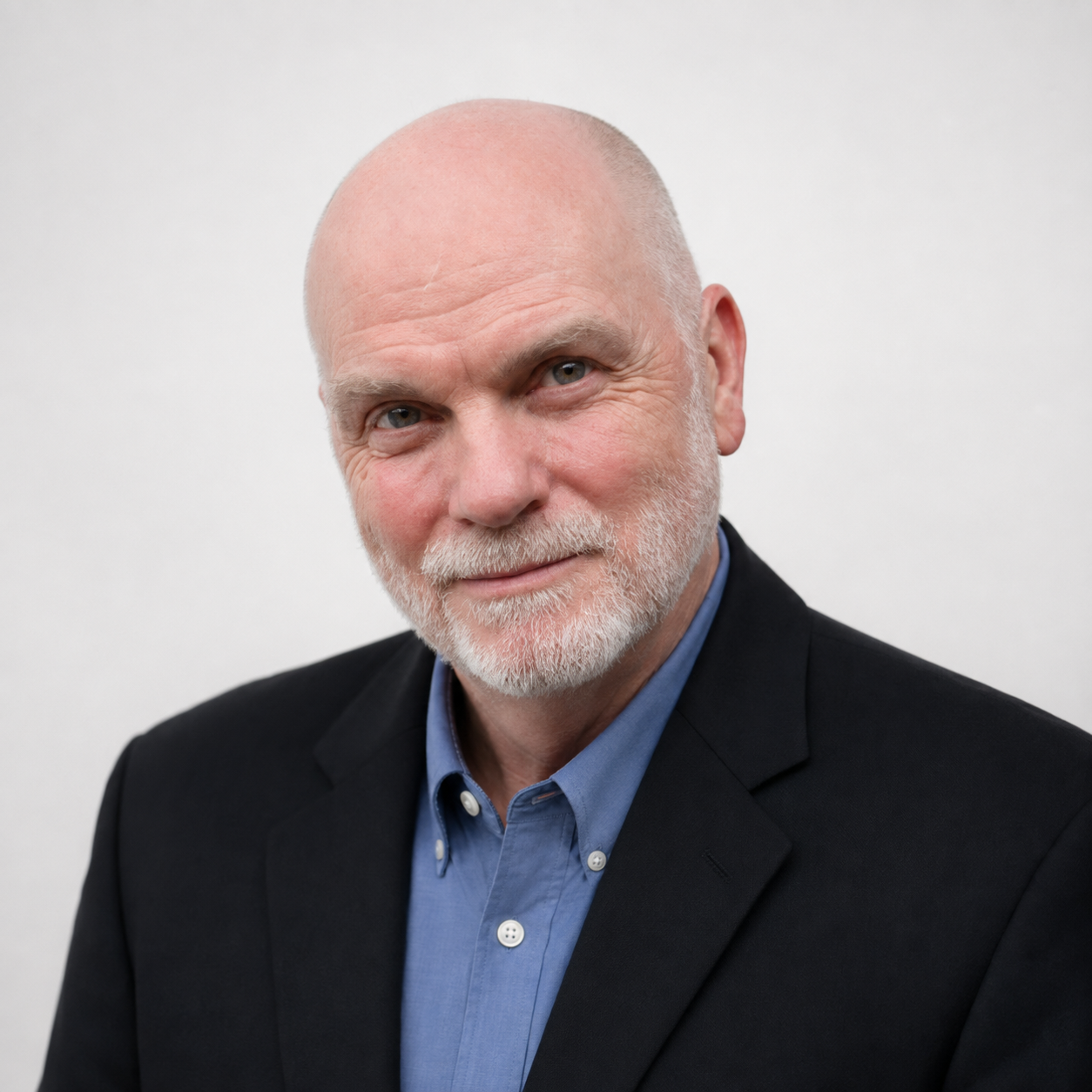
By Dr. Russell Knight President, Artificial Intelligence Institute
For nearly three decades, my job has been to make sure machines don't get to guess.
At NASA's Jet Propulsion Laboratory, I've spent my career building systems that operate where human help can't reach them, across hundreds of millions of miles, with no one available to intervene if something goes wrong. Confidence is not proof out there. An elegant answer is not the same as a correct one. Every assumption gets examined. Every system is built to know the limits of what it knows.
That work remains my first and highest professional responsibility. It is where I spend the overwhelming majority of my time, and it is a responsibility I hold with enormous gratitude, for the mission, and for the extraordinary people I get to do it alongside at JPL.
I never expected the same principles that guide a spacecraft through deep space would show up in a fourth-grade classroom.
But they did.
A Question Started Following Me Home
It didn't happen all at once. Over the past several years, in whatever hours weren't already spoken for by JPL, a different question started occupying my attention. It wasn't about spacecraft.
It was about children.
AI was moving into homes and classrooms faster than any curriculum, any policy, or any teacher training could keep up with. It wasn't arriving through a carefully built program. It was arriving through the kids themselves, quietly, one homework assignment at a time.
They were using it to answer questions, draft essays, solve for x, summarize a reading, generate an idea, finish a project the night before it was due.
We had handed an entire generation one of the most powerful thinking tools ever built.
Almost none of them had been taught how to drive it.
That didn't worry me because I think AI is dangerous, or because I think kids should be kept away from it. I've spent my career believing in what this technology can do. What worried me was simpler, and more specific: what happens to a mind that gets to skip the part where it has to think?
When a student asks AI for the answer before attempting the problem, the assignment still gets turned in. But the thinking the assignment was supposed to build never happens. Researchers have a name for this: cognitive offloading. It isn't new, people have always used tools to extend memory and effort. Used well, that's a gift. Cognitive offloading only becomes a problem when assistance turns into substitution, when a student stops practicing the very muscle, they're supposed to be strengthening.
That is not a technology problem.
It's a behavioral one. And behavioral problems have solutions.
The Human Mind Has to Stay the Operating System
Here is the single idea everything else in this essay is built on:
Human thinking must remain the operating system. AI is the accelerator, never the replacement.
AI shouldn't be the source of a child's curiosity. It should expand it. It shouldn't replace their reasoning. It should sharpen it. It shouldn't erase the productive struggle that real understanding is made of, it should walk a student through that struggle with better questions and faster ways to test an idea.
The question was never going to be whether kids would use AI. They already are, every day, unsupervised, in every subject. The only real question is whether we teach them to use it in a way that keeps their judgment intact, or whether we let a generation quietly outsource the one skill no future will ever stop requiring.
I believe that training has to start now. Not in college. Not in a corporate onboarding session after the habits are already set. It has to start in K-12, at an age-appropriate level, before answer-seeking hardens into dependency.
What We Watched Happen, In Real Classrooms
During the hours that weren't spoken for by JPL, I've had the privilege of working with the Family First Foundation and the Artificial Intelligence Institute on exactly this problem. Over two years, we ran voluntary after-school AI programming across 20 school sites, reaching thousands of students, the majority in grades four through six, with participation extending upward into the higher grades in our earliest sessions.
This mattered because it was voluntary. Nobody was performing for a grade. Kids told us, candidly, how they were actually using AI, for math, for writing, for research, for questions they didn't feel comfortable asking anyone else, and sometimes, simply because it was faster than thinking it through themselves.
The real discovery wasn't that these students were using AI. Of course they were. It was how little guidance most of them had ever received before doing it.
So we taught a different sequence:
Think before prompting. Reason before retrieving. Ask before accepting. Verify before trusting. Create before copying.
We watched "give me the answer" turn into "help me understand." We watched "write this for me" turn into "ask me questions that make my idea better." We watched passive acceptance turn into verification, and shortcutting turn into actual exploration.
Those aren't just better prompts. They're better habits of mind, and once a habit forms, it's remarkably durable. Students came back for more. Site administrators sat in to evaluate a single class and stayed for the whole program. Teachers started asking for a version built for them.
None of that means every question about AI in education has been answered. It hasn't, and I won't pretend otherwise. But it tells me something I didn't fully believe until I watched it happen: the intervention works, and it works fast.
The Same Science Travels From Fourth Grade to the Boardroom
Here's what surprised me most: the underlying behavioral science doesn't stop at the classroom door.
A fourth grader has to learn not to accept a fluent AI answer without checking it. So does a physician. So does an attorney, an engineer, a board member deciding whether to hand a forecast or a hiring decision to an automated system.
A nine-year-old has to learn that AI can sound completely confident while being completely wrong. So does every adult making decisions that affect other people's lives.
This is why I've come to believe behavioral AI readiness isn't a K-12 problem or a workforce problem. It's one problem, at every age, from fourth grade to the boardroom. We don't need more people who know how to operate an AI tool. We need people who know how to keep their judgment intact while they do.
Every Child. Not Just the Ones Whose Schools Can Afford It.
My hope for this work is ambitious, but it isn't complicated.
I want every child in America to get this training, not only the students in well-resourced districts, not only the ones whose families can pay for a private program, not only the ones lucky enough to land in a school with the staff and the vision to seek this out on their own.
Every child, regardless of ZIP code, deserves to learn how to use AI as a thinking partner instead of an answer machine. If access to that training stays unequal, AI won't just be a cognitive amplifier, it will widen every gap it was supposed to help close. Giving a child the tool isn't the finish line. Giving them the judgment to use it well is.
The Foundation and the Institute are working toward a path where this training is available free of charge to every K-12 student and every school district in the country. No single organization is going to solve something this size alone, and honestly, it shouldn't have to be ours. Whether it happens through our program or another responsible one built on real evidence, the goal should be the same everywhere: every student learns to think with AI before they learn to let AI think for them.
The Frontier Closer to Home
I remain deeply grateful for the work I get to do at JPL, and for the people I get to do it with, that will always be my principal professional focus and my highest responsibility.
But in whatever hours are left over, I've come to feel a second responsibility: making sure the next generation doesn't lose its own capacity to reason, question, and create simply because a machine can produce an answer in three seconds.
AI can be one of the great cognitive amplifiers in human history. It can help a child see possibilities they'd never have found on their own. But only if a human being stays in command of the thinking.
The future of artificial intelligence won't be decided only by how intelligent our machines become. It will be decided by the habits we build in the people who use them.
Effective AI behaviors, practiced consistently, become lasting human habits.
That work has to start now. And it has to start with every child.
Author's Note: Dr. Russell Knight's work with the Artificial Intelligence Institute and Family First Foundation is conducted independently, during his personal time. The views expressed here are his own and do not represent an official position or endorsement by NASA, the Jet Propulsion Laboratory, or the California Institute of Technology.
About the Author: Dr. Russell Knight is President, Artificial Intelligence Institute, and a senior AI technologist at NASA's Jet Propulsion Laboratory, where his work has included automated planning and scheduling, real-time planning and execution, heuristic search, operations research, and space-exploration automation. He holds a B.S. in Computer Science from the University of Maryland and an M.S. and Ph.D. in Computer Science from UCLA. His work with the Institute focuses on developing behavioral frameworks that help students and adults use AI as an extension of human thinking, creativity, and judgment.


Comments